
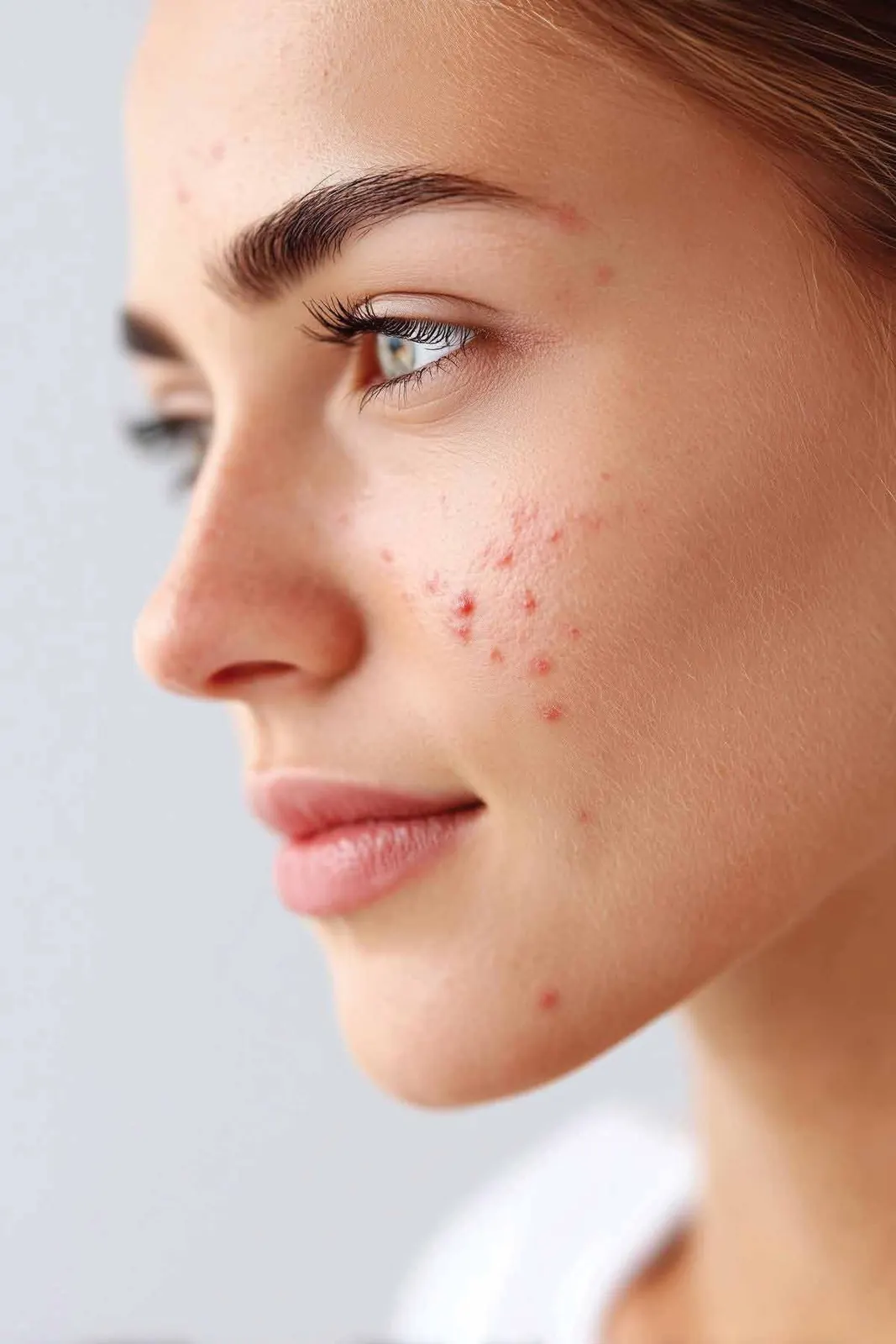
Ask a group of fifteen-year-olds what bothers them about their skin and two answers come up again and again: pimples along the forehead and flakes on the school uniform. Most brands sell these as separate problems, in separate aisles. Yet teenage dandruff and acne products work best when they are planned together, because both conditions grow out of the same change at puberty: oil glands on the scalp, face, chest and back become far more active. This guide is for founders who want to build a teen range that treats the scalp and the face as one connected area, with formulas that do not fight each other and claims that stay within Indian cosmetic rules.
Why teenage dandruff and acne products belong in one range
Sebum is the common thread. A 2024 review of yeast-related skin conditions in children and adolescents in Pediatric Dermatology notes that seborrheic dermatitis, the condition behind most stubborn dandruff, peaks in two age bands: infancy and adolescence. The same review links several teen-onset conditions to the rise in sebaceous gland activity that comes with puberty (Chang and Stein, 2024). Acne follows the same hormonal curve. So the teenager who starts seeing flakes at thirteen is often the same one buying a pimple patch at fourteen.
For a brand, this overlap is a commercial opportunity as much as a scientific one. A shopper who trusts your face wash is an easy buyer for your anti-dandruff shampoo, and a combined routine is simpler to explain to a parent than six unrelated products. It also solves a real product problem: a heavy, oily hair product can undo the work of the best acne cleanser, while a harsh anti-dandruff shampoo running down the face can irritate skin that is already being treated. Designing the range as one system lets you control both ends.
What the research says about the scalp and face connection
Three lines of evidence are useful when you write your product story. Each has limits, and good brand copy respects them.
1. Yeast on the scalp, bumps on the skin
The yeast Malassezia lives on oily skin everywhere, and it is associated with both dandruff and a lookalike of acne called Malassezia folliculitis. That condition shows up as small, even-sized, itchy bumps, often on the chest, shoulders, back, hairline and scalp edge. The pediatric review describes it as one that commonly affects adolescents and is frequently mistaken for acne. The clues that point away from ordinary acne are itch, no blackheads or cysts, and bumps along the hairline rather than in the centre of the face.
A prospective study of 320 people diagnosed with acne at a Bangkok dermatology clinic, published in Clinical, Cosmetic and Investigational Dermatology in 2022, found Malassezia folliculitis in 28.8% of them, either alone or alongside acne. Dandruff was clearly more common in that group: 31.5% of patients with Malassezia folliculitis had dandruff, against 6.6% of those without it (Paichitrojjana and Chalermchai, 2022). The cohort covered ages 11 to 50 with a mean age of about 26, so it is not a teen-only result, but it supports the idea that a flaky scalp and stubborn hairline bumps can travel together.
2. Hair products can cause breakouts on their own
The American Academy of Dermatology explains that shampoos, conditioners and styling products can trigger whiteheads and small skin-coloured bumps along the hairline, upper forehead and back of the neck. This is called acne cosmetica, and oily products such as pomades are a common trigger. The AAD says the skin usually takes four to six weeks to clear after the product is stopped, and it points shoppers to labels such as non-comedogenic, oil free or non-acnegenic. For a teen brand, that advice is a product brief in itself: your conditioner, hair oil and styling cream need to be designed and tested with the forehead in mind.
3. Residue travels further than people think
A small case report in the Journal of Drugs in Dermatology (Rubin and Gourion-Arsiquaud, 2020) used tape strips and infrared imaging on one volunteer. Shampoo and conditioner residue could still be detected on the forehead, cheek and upper back two hours after washing, and a leave-in styling product was still present after four hours. With a single subject and no acne outcome, it proves nothing about breakouts, but it is a helpful picture for consumers: what goes on the hair does not stay on the hair.
A note on honesty: the scientific picture is still being argued. The pediatric review states plainly that the role of Malassezia in seborrheic dermatitis is disputed and that the cause is probably a mix of oil, skin barrier, genetics and immunity. Your copy can say the scalp and skin are connected; it should not say that dandruff causes acne.
Mapping the problem zones: scalp, hairline, face and back
Before choosing actives, map where a teenager actually sees trouble and which product touches that area. This map becomes the skeleton of your range.
| Zone | What teens notice | Products that touch it | Design goal |
|---|---|---|---|
| Scalp | White or yellowish flakes, itch, greasy roots | Anti-dandruff shampoo, scalp tonic | Control flakes and oil without stripping |
| Hairline and forehead | Small closed bumps, itchy spots near the hair | Shampoo rinse water, conditioner, hair oil, styling cream | Low-residue, non-comedogenic hair products |
| Central face | Blackheads, pimples, oily T-zone | Face wash, serum, moisturiser, sunscreen, pimple patches | Gentle exfoliation and oil balance |
| Neck, chest and upper back | Bumps under collars and sports kit, sweat-related spots | Body wash, shampoo and conditioner running down in the shower | A rinse-off body product with the same care |
The table shows why a stand-alone acne kit often disappoints. If the conditioner leaves a film on the forehead every morning, no face wash can fully make up for it. A joined-up range lets your brand promise a routine where every product respects the zones around it.
Building a range of teenage dandruff and acne products
A first launch does not need ten products. Three to five well-matched items cover most teenagers, with room to add later. The table below is a sensible starting point, built from formats and ingredients that already sit in our teen skin care, anti-acne and shampoo ranges.
| Product | Role in the routine | Typical actives and technology | Launch priority |
|---|---|---|---|
| Anti dandruff shampoo for teenagers | Controls flakes and scalp oil | Piroctone olamine, salicylic acid, mild coconut-derived or amino-acid surfactants; optional liposomal delivery | Core |
| Teen acne face wash | Daily cleanse for oily, spot-prone skin | Encapsulated salicylic acid, zinc PCA, niacinamide in a gel or foam base | Core |
| Lightweight conditioner | Detangles lengths without coating the hairline | Low-oil base, rinses clean, tested as non-comedogenic | Core |
| Clarifying serum or spot gel | Targets marks and active spots | Niacinamide, azelaic Z-Pods, centella | Second wave |
| Oil-control gel moisturiser and sunscreen | Hydration and daily protection without shine | Hyaluronic acid, zinc PCA; lightweight mineral or hybrid sunscreen | Second wave |
| Body wash for back and chest | Extends the routine below the collar | Salicylic acid or piroctone olamine in a rinse-off wash | Optional |
| Hydrocolloid pimple patches | Protects single spots, stops picking | Day and night hydrocolloid patches | Add-on |
A few practical points sit behind this table. Piroctone olamine is one of the anti-dandruff actives we formulate with in shampoos, and it suits a teen line because it can be used in mild, pleasant-foaming bases. Salicylic acid is useful on both the scalp and the face, which gives your range a shared hero ingredient and a simple story. On the face, encapsulated and controlled-release actives help keep formulas gentle on young skin. Our Liposomal Shampoo uses lipid vesicles to carry actives to the scalp, an option for brands that want a technology-led claim.
Our graded system also helps here. For daily teen use, Grade 1 and Grade 2 formulas are usually the starting point, with Grade 3 options for more persistent concerns. If you want to understand how grading works across an acne line, read our guide to the acne skincare grading system.
Formulation rules that keep hair care off the forehead
The biggest difference between a generic hair range and one built for spot-prone teenagers lies in the details of the hair products. These are the rules we would put in the brief.
- Keep leave-on oils light. Heavy oils and waxes in hair serums and styling creams are the classic cause of hairline bumps. Choose lighter emollients and lower loads, and keep pomade-style textures out of a teen range.
- Design the conditioner to rinse clean. A conditioner that feels slippery but leaves no film on the skin is the target. Ask for rinse tests and for the product to be applied to the lengths, not the roots, in the usage instructions.
- Test for comedogenicity before you print the word. A non-comedogenic hair product claim needs evidence for the finished formula, not just for single ingredients. Plan this test into the timeline.
- Balance scalp actives and skin comfort. Anti-dandruff shampoo foam runs over the forehead, eyes and back. Keep surfactants mild, fragrance moderate and the pH comfortable for skin, and run an eye-area safety check.
- Match the fragrance across the range. One light, fresh scent family across shampoo, face wash and body wash feels like a system and avoids loading young skin with several strong perfumes.
- Write routines into the pack copy. Simple advice such as washing the face after rinsing out conditioner, and changing pillowcases regularly, echoes the AAD's guidance and makes the range work better in real life.
For a deeper look at shampoo bases, surfactant choices and anti-dandruff formats, our third-party shampoo manufacturing guide covers each step.
Claims and labels for teenage dandruff and acne products in India
The fastest way to turn a cosmetic into a regulatory problem is to promise a cure. Under the Drugs and Cosmetics Act and the Cosmetics Rules, 2020, a cosmetic is a product applied to the body to cleanse, beautify, promote attractiveness or alter the appearance. Products meant to treat a disease fall under drug rules instead. Antifungal medicines that dermatologists prescribe for seborrheic dermatitis or Malassezia folliculitis, such as ketoconazole preparations, sit on the medicine side of that line, so they do not belong in a cosmetic teen brief.
In practice, keep the language about appearance and feel:
- Prefer "helps reduce visible flakes", "helps control scalp oil" and "helps reduce the look of blemishes" over "cures dandruff", "treats acne" or "kills fungus".
- Back every percentage and "clinically tested" statement with a test report on the finished product.
- Use "non-comedogenic" only after the formula has been tested for it.
- Add a short line advising a dermatologist visit if itchy bumps or flakes do not improve, which is honest and builds trust with parents.
- Follow the Legal Metrology packaging rules and the cosmetic labelling requirements for ingredient lists, batch, dates and manufacturer details.
We help brands word claims their evidence supports, and we check artwork before production. For more on what suits younger skin, see our teen skincare products guide.
How Ecosmetix develops teenage dandruff and acne products
We develop, manufacture and fill skin care and hair care at our plant in Ambala, Haryana, and deliver across India. Because both categories sit under one R&D team, the shampoo and the face wash are built side by side rather than sourced from two suppliers with two philosophies. The process follows six steps.
Brands can launch faster from our 100+ proven, graded formulas under private label, ask our R&D team for a custom formula built around their actives and cost, or bring their own formula for third-party manufacturing. A lab sample is usually ready within 14 days of an approved brief.
Brief checklist for a teen scalp and skin range
Bring these answers to your first call and the first round of samples will be far closer to what you want:
- Age band you are targeting (tweens, early teens or older teens) and whether parents or teens are the main buyers.
- The zones you want to cover: scalp only, scalp and face, or scalp, face and body.
- Your hero ingredient story, for example salicylic acid across the range, or piroctone olamine for the scalp and niacinamide for the face.
- Texture and scent preferences, with one or two benchmark products you like.
- The claims you hope to make and the budget for testing them.
- Pack types and sizes, such as a travel-size shampoo for school trips or a pump face wash.
- Target cost per unit and first-order quantity for each SKU.
Ready to start? Share your product brief with the zones, actives and price you have in mind, and our team will suggest a matched set of teenage dandruff and acne products for your brand.
Frequently asked questions
Is there a link between dandruff and acne in teenagers?
Both become more common at puberty, when oil glands on the scalp and skin grow more active. Research also links dandruff with Malassezia folliculitis, an itchy, acne-like rash on the hairline, chest and back. The evidence shows they often appear together; it does not prove that dandruff causes acne.
Can anti-dandruff shampoo cause forehead acne?
Shampoo itself is rinsed off quickly, but conditioners, hair oils and styling creams can leave residue along the hairline. Dermatologists call breakouts from hair products acne cosmetica. Mild shampoos, clean-rinsing conditioners and light leave-on products reduce the risk.
Which anti dandruff shampoo actives suit teenagers?
Cosmetic options include piroctone olamine and salicylic acid in mild surfactant bases. Antifungal medicines such as ketoconazole are prescribed by doctors and fall under drug rules, so they are not used in a cosmetic teen range.
What is Malassezia folliculitis and how is it different from acne?
It is a rash of small, even, itchy bumps caused by an overgrowth of a skin yeast, often on the chest, back, shoulders and hairline. Unlike acne it usually has no blackheads and itches. It needs a dermatologist's diagnosis, and brand copy should suggest seeing one if bumps do not improve.
What does non-comedogenic mean on a hair product?
It means the finished product has been tested and found not to block pores. For teen hair care it matters most on conditioners, serums and styling products that can touch the forehead and neck. The claim should be backed by a test on the final formula.
Can a cosmetic shampoo claim to cure dandruff in India?
No. Cosmetics are for cleansing and improving appearance under the Cosmetics Rules, 2020. Use wording such as 'helps reduce visible flakes' and keep treatment or cure claims out of cosmetic labels.
How many products should a teen dandruff and acne range start with?
Three to five products are enough for a first launch: an anti-dandruff shampoo, an acne face wash and a lightweight conditioner, followed by a serum, moisturiser, sunscreen or body wash once the core sells.
References
- Paichitrojjana A, Chalermchai T. The Prevalence, Associated Factors, and Clinical Characterization of Malassezia folliculitis in Patients Clinically Diagnosed with Acne Vulgaris. Clinical, Cosmetic and Investigational Dermatology, 2022
- Chang CH, Stein SL. Malassezia-associated skin diseases in the pediatric population. Pediatric Dermatology, 2024
- American Academy of Dermatology: Are your hair care products causing breakouts?
- Rubin IK, Gourion-Arsiquaud S. Deposition and Retention of Hair Care Product Residue Over Time on Specific Skin Areas. Journal of Drugs in Dermatology, 2020
- CDSCO: Cosmetics Rules, 2020
- Department of Consumer Affairs: Legal Metrology